
AI, data and digital transformation
Engineering discipline for AI.
We bring systems thinking and real expertise in construction, BIM and data to how organisations use AI: across the business, in design calculations and in project management. The AI we build shows how it reaches its results and stays under your control.
What you can bring us
Most of our work starts with a problem like one of these. If yours sounds familiar, we should talk.
-
“We want to use AI, but safely.”
Teams are already trying AI tools, and nobody is sure what is allowed. We set out where AI may help, who checks what it produces and what gets recorded, so you can move ahead with confidence.
For example: rules for AI use across a construction project, agreed by every party.
-
“We can never find the right answer.”
Your policies, reports and manuals live across drives and inboxes. We build assistants and search that answer from your own sources and show where each answer came from.
For example: a staff assistant that answers questions from internal regulations.
-
“Too much of the day is copy and paste.”
When people move data between systems, compile the same reports or chase approvals, we automate the routine steps and keep people in charge of the decisions.
For example: project documents turned into structured records, with a review step before anything is filed.
-
“Our method only lives in a spreadsheet.”
Some expertise sits in fragile files or in one person's head. We turn it into an application your whole team can use and improve.
For example: an engineering design check that runs end to end and shows its inputs beside its results.
What we do
Four kinds of work, often combined. Building your team's own capability is part of every one.
Where should AI go?
Digital transformation and AI strategy: we map how your organisation really works, find where AI and data will change outcomes, and turn that into a roadmap and an architecture you can follow.
How do we stay in control?
AI and data governance: the policies, roles, risks and controls that let you use AI with confidence, including governance of digital delivery on construction projects.
Build it into our work
AI in your workflows, and software built AI-first: design calculations, project management, documents and reviews, with people in charge of the decisions.
Digital delivery and data
BIM, model quality and project data: information that is checked, connected and ready for analysis and AI.
Examples of our work
Projects and products that show how we think. Each one is an example, not the limit of what we do.

AI and data governance
Governing a project's digital delivery
On a construction project, owners, managers, designers and contractors each bring their own systems. We help set up the decision rights, the shared information and the rules for AI that let them work as one.
Read the example on project governanceEngineering software
RailDyn
A complete engineering design check, the dynamic check of railway bridges, turned into software. It runs every case and puts the answer on one page, fast enough to rerun after every design change.
Read the story of RailDyn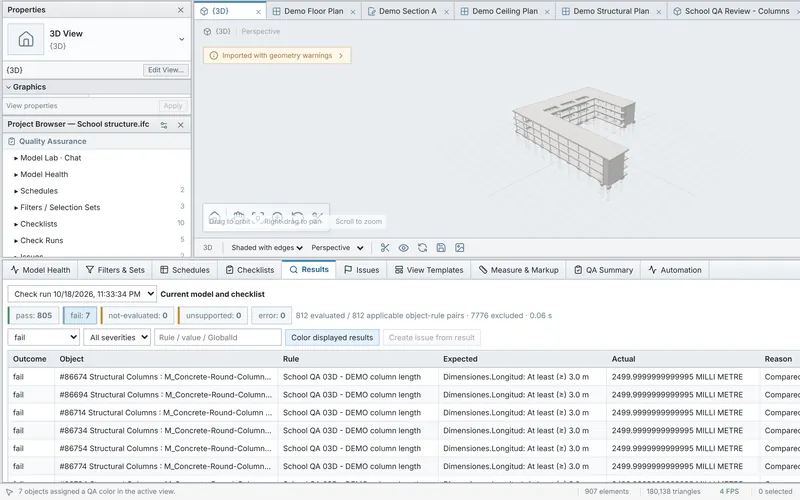
Digital delivery
BIM model review
Model checks you can see in 3D and repeat the same way every time, with an AI assistant that explains a review but never changes how it runs.
Read the story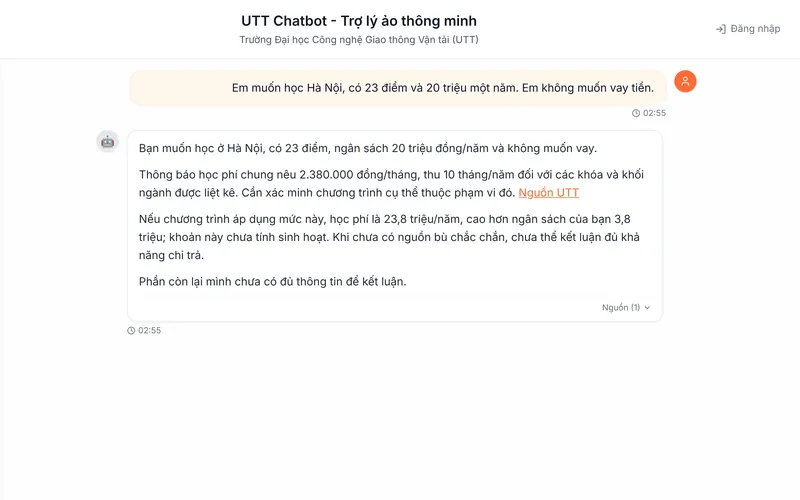
Knowledge assistant
UTT admissions assistant
Answers applicants from the University of Transport Technology's own notices, links every answer to its source, and says so when the information isn't there.
Read the storyHow we keep AI trustworthy
Three principles run through everything we build. You can see each one at work in our own products.
Every answer shows its source
An answer you can't trace is an answer you can't use. Our admissions assistant links every reply to the official notice behind it, and says so when there isn't one.
Checks run the same way every time
Where a result matters, it comes from a fixed, tested process, not from a model's best guess. In our model review tools, AI explains a review but the checks run as versioned steps.
People make the decisions
AI prepares, drafts and explains. A person accepts the result. That holds in the systems we build for clients, and in the workspace we are building for our own team and its AI agents.
Learn the methods we use
AIVN360 Learn is our free library of courses and videos in English and Vietnamese, drawn from the same practice we bring to client work. No account needed.
AI agents and harness engineering
A learning path from a first agent loop to a platform architecture: the tools, context, permissions and checks that make an agent reliable.
BIM and Revit
Building information modelling as a way of thinking, and hands-on Revit from a first model to a complete set of drawings.
AIVN360 on YouTube
Vietnamese-language discussions on AI agents, AI coding tools, AI in business and the foundations of AI, grouped into playlists by topic.
Who we are
Built by engineers who love technology.
AIVN360 was founded by Vietnamese and Australian engineers who are passionate about technology and bring deep technical expertise. Our backgrounds are in structures, infrastructure, BIM, data and AI, in fields where a wrong answer has real consequences.
We bring the same habits to every organisation we work with: understand the whole system first, build what fits it, and check the result before anyone relies on it.
Got a process that should work better?
Tell us about your organisation and what you'd like to change. We'll reply quickly with an honest view of how we could help.
What helps us reply well
- Your name and organisation
- The process, project or decision you'd like to improve
- Where the information lives today: documents, models, databases, a shared drive
Write to lekhuong@aivn360.com. A few lines are enough to start.